
An Honest Inito Review: From a Fertility Coach of 16+ Years
A fertility coach's honest Inito review: how tracking 4 hormones - not just LH - helped her clients confirm ovulation and understand their bodies.
Disclosure: This post contains an affiliate link. I personally use and recommend Inito with my clients, and all opinions are my own.
Quick take: After 16 years of helping women trying to conceive, I've seen the same thing over and over: OPKs that rely on tracking the LH-only hormone to tell you ovulation might be happening, not that it actually did. Inito tracks four key hormones - estrogen, LH, FSH, and PdG - to show your full fertile window and confirm ovulation, and I now use it with my own clients. The Inito Fertility Monitor now comes with a standalone wireless reader that fits easily into busy mornings. It’s especially helpful for irregular cycles, PCOS, and anyone getting LH surges without clear confirmation that they ovulated.
If you've been trying to conceive, you've probably been told just to track your LH hormone. But like many women I work with, you might still feel unsure about what your body is actually doing. That’s where multi-hormone tracking comes in.
In this blog, I’ll share my honest review of the Inito Fertility Monitor, which helped my clients and me get a clear view of their full fertile window and understand their cycle in detail. If you’ve been curious about Inito reviews or wondering how a device like Inito could work for you, this blog will break it down for you.
What Is Inito And How Does It Work?
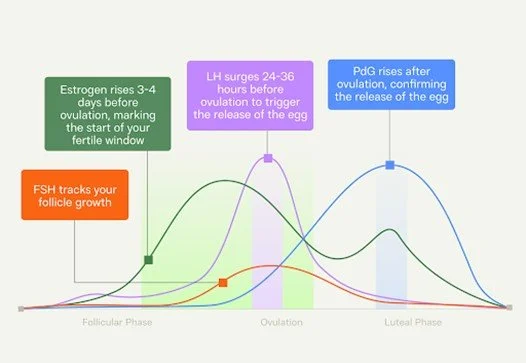
Inito is a multi-hormone fertility monitor that measures four key fertility hormones in urine and delivers the most precise¹ fertility hormone readings at home
Estrogen: rising before ovulation
LH: signaling ovulation may be approaching
PdG (a urine metabolite of progesterone): increases after ovulation
FSH: supporting follicle development
Most ovulation tracking only looks at one of these - LH, which tells you your body is attempting to ovulate, not that it actually did. What really makes Inito different isn't just what it tracks - it's how those hormones are viewed together.
Instead of one moment (like an LH surge), you see your full 6-day fertile window as your cycle unfolds. That means you can understand how your body is preparing for ovulation, when it's actually approaching, and whether ovulation truly happened afterward.
That's a different level of insight than traditional ovulation tracking gives you, and it’s what led me to explore it more closely, both for myself and with my clients.
My Honest Review of the Inito Fertility Monitor
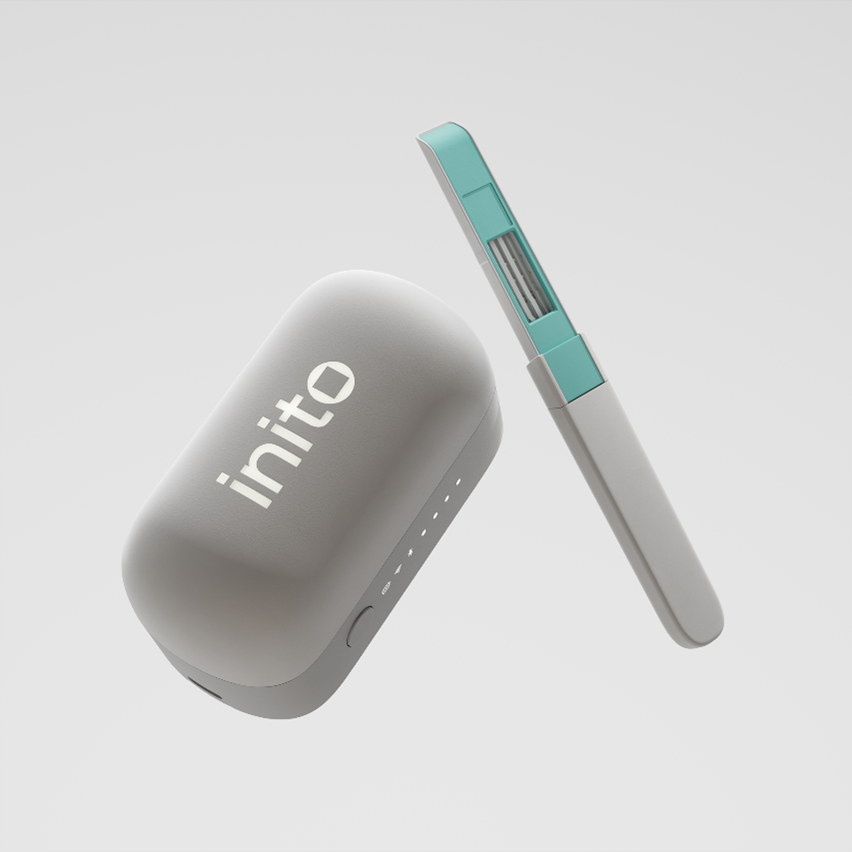
I’ve been using the Inito Fertility Monitor, a standalone wireless reader with built-in Wi-Fi, both personally and with my clients. Since April, 2026, it is also available for both Android and iOS devices.
My honest first impression was - this makes hormone tracking realistic. It fits easily into busy mornings, which is what makes consistency actually possible.
To start a test, you just have to dip the Fertility Strip in your first morning urine, insert it in the reader, and go about your morning routine without needing to stay next to your phone or actively monitor the process. It’s that simple!
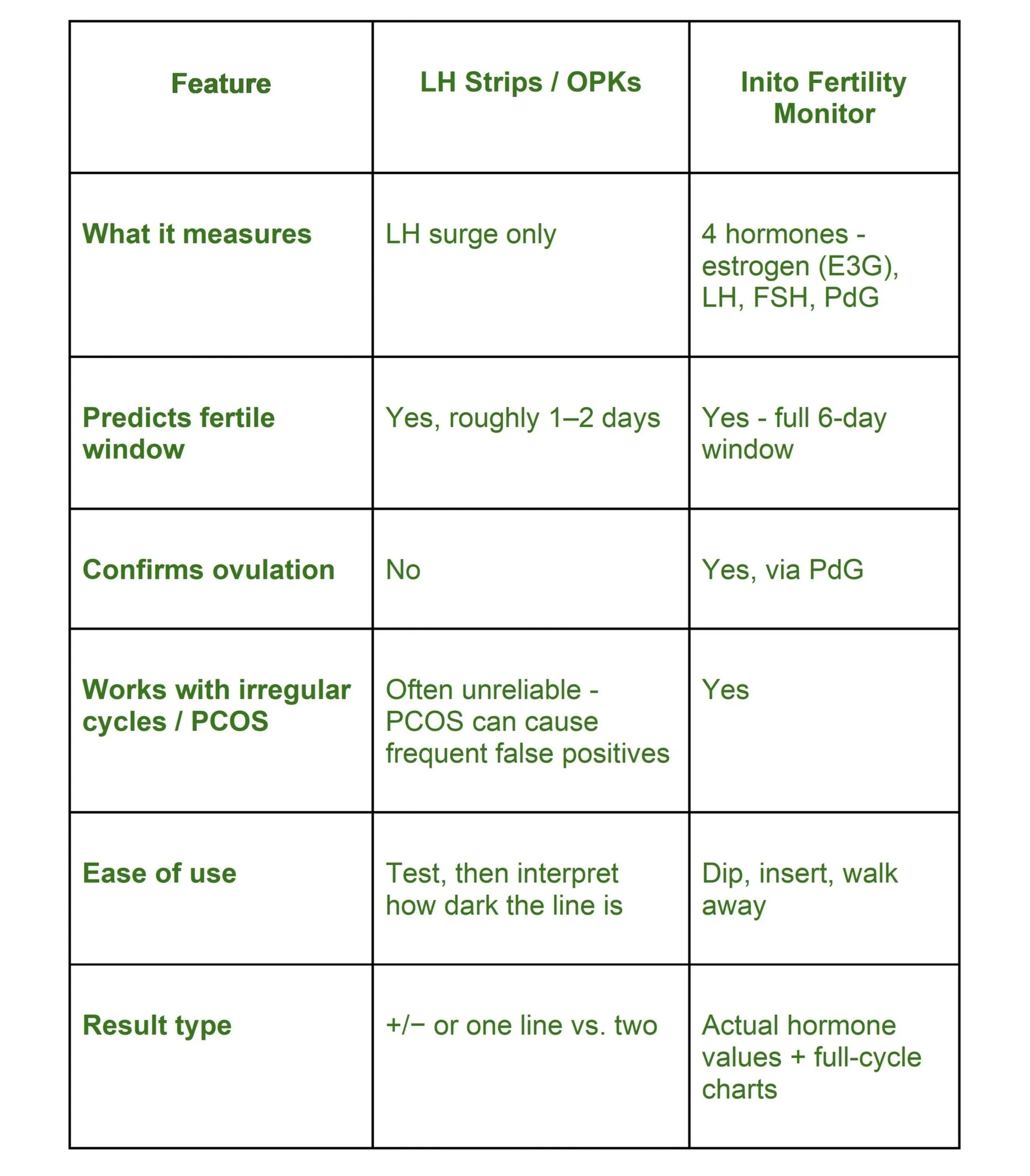
If you've ever used Clearblue, First Response, or any standard OPK, you know the experience: you stare at two lines and try to decide if the test line is "dark enough" yet. What most people don't realize is that those strips are measuring your LH against a fixed population average - typically around 20–40 mIU/mL. If your LH naturally runs higher than that average (common with PCOS), you might see what looks like a positive almost every day, with no way to know if ovulation actually followed. If your LH runs lower, you might get consistently faint lines and assume you're not ovulating - when you actually are. Either way, you're left guessing.
That's why the readings you get from Inito feel fundamentally different. Instead of comparing one line against a population threshold, it measures your actual hormone values - what your body is doing, not what an average body is supposed to do..
What really gives me confidence using this with my clients is the technology behind how it reads those values. The Inito Fertility Monitor uses Inito's patented Spectral Mapping™ technology - a dual-sensing system that scans the entire Fertility Strip, not just a single test line, capturing precise, measurable hormone data at multiple points across the strip. This means it can pick up even small changes in hormone levels that a standard strip would miss entirely, giving you results you can actually trust.
As a fertility coach, this is one of the key reasons I trust the data I’m seeing. It removes the subjectivity that comes with traditional ovulation testing and gives me consistent, interpretable hormone patterns across cycles. In fact, clinical studies have shown that Inito is 95% as accurate as blood hormone trends and confirms ovulation with over 99% specificity.
The Inito App Experience
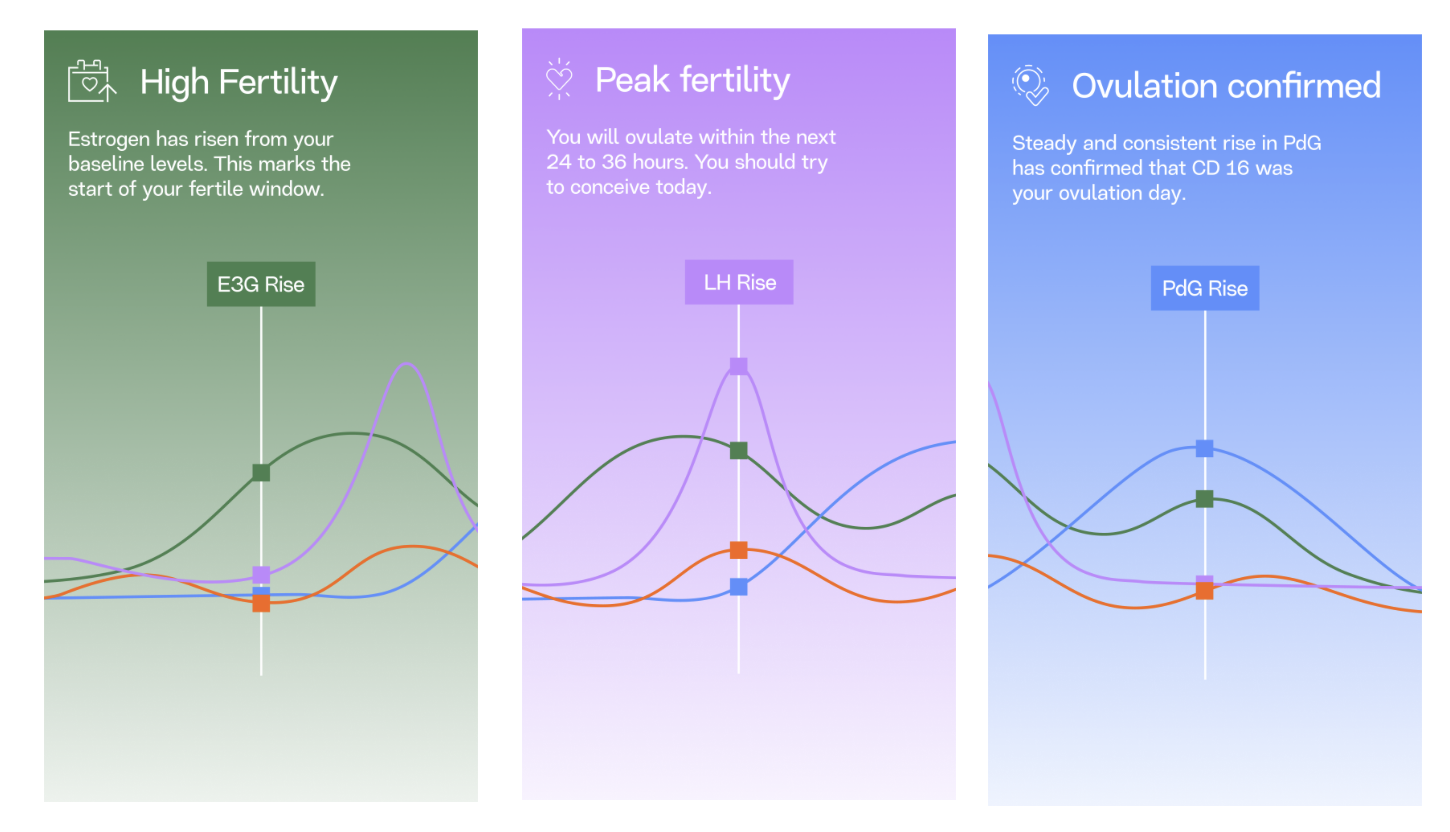
Inside the app, you can see your hormone patterns across the entire cycle, when your body is approaching ovulation, when it reaches peak fertility, and confirm if you have ovulated that cycle.
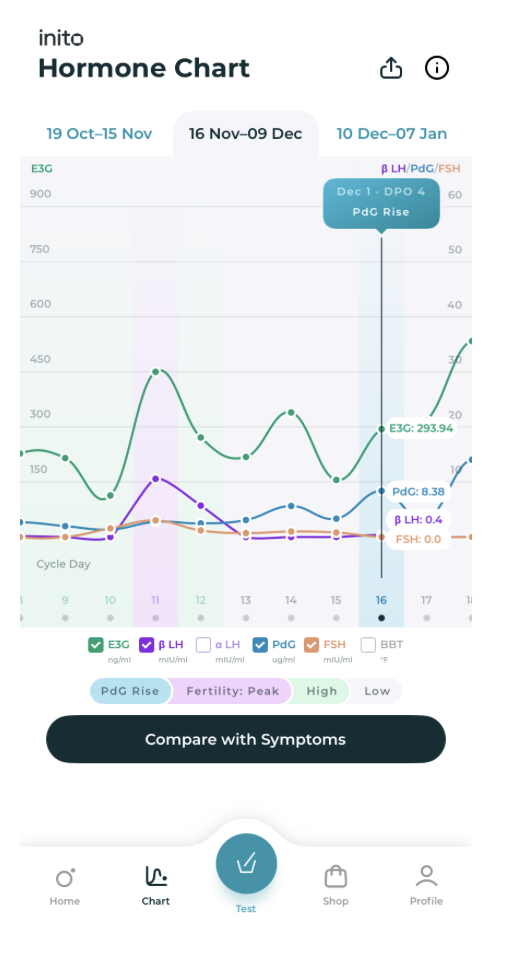
What I appreciate most, both as a user and as a coach, is that it doesn't just hand you a date - it shows your hormone trends all in one place. The app also lets you log your symptoms, so your hormone data and how you're actually feeling live in the same place.
And because it sends you a notification when it's time to test again, testing just becomes part of your routine.
Inito also makes it easy to share and export charts, so instead of describing symptoms or recalling test results from memory, my clients and I can look at the same chart together and have a much more specific conversation about what's actually happening in their cycle.
Why Tracking LH Alone Isn’t Always Enough
After 15 years working with women on their fertility journeys, the question I hear most often is: "I'm doing everything right - so why isn't this working?"
Most of the time, it's not that they're doing something wrong. It's that the tools they're using can't show them enough of what's actually happening. And that gap - between what a single hormone like LH can tell you and what your body is actually doing - is exactly what Danielle Babbitt, an Inito user, experienced firsthand.
Danielle was 36 when she came off birth control after more than 20 years and started trying to conceive using standard ovulation kits for three months but they didn't give her much clarity.
"I had no idea what my body was going to do. I started tracking my ovulation with normal ovulation kits. Tried for three months with no luck before I bought Inito."
The first cycle on Inito changed what she was looking at entirely.
"The first cycle on Inito, I noticed my luteal phase was only 9 days. The Inito support group helped me realize I should check with my doctor if I have a luteal phase defect. I knew I didn't want to waste time."
She brought those observations to her doctor, who prescribed 100mg progesterone after ovulation. Her luteal phase increased to 11 days, but she still didn't conceive. The dose was then increased to 200 mg, and three cycles tracking with Inito later, she became pregnant.
"If I didn't have Inito, I would not have considered checking with my doctor about a luteal phase defect due to low PdG levels and a short luteal phase. I could still be trying for my beautiful baby girl, Nova, I have in my arms every day."
What stands out most to me isn't just the outcome-it's the process that made it possible. Danielle noticed a pattern, understood what it might mean, and took that information to her healthcare provider. That changed the conversation and ultimately changed her care.
As a practitioner, this is exactly what I mean when I talk about moving from guessing to understanding. You can't advocate for yourself with information you don't have. But when you can see what your body is actually doing - cycle by cycle - you can have more informed conversations with your healthcare provider and make decisions based on evidence rather than assumptions. And for Danielle, that made all the difference.
Inito vs LH Strips at a glance
What Inito Showed When Everything Looked "Normal"
Not every story is about catching a missed surge. Sometimes the bigger insight is what's hiding behind a cycle that looks completely fine. Lindsay Sweet - an Inito user’s story reflects just that.
Lindsay has PCOS, and before trying to conceive, she spent years working with a nutritionist to regulate her cycle through diet and lifestyle - going from periods every 90–120 days to every 45–60 days. But when she and her husband started trying, she still felt like she was working blind.
"Conceiving with PCOS felt like a shot in the dark with variable cycle lengths, missed ovulations, and more. I began looking into hormone trackers and things I could do at home to feel more empowered and informed about my fertility - this led me to Inito. I was able to have better conversations with my doctors, support my fertility decisions with data, and have better chances to conceive."
What happened next is the part I come back to. During the cycle she conceived, her doctor told her she "wasn't even close" to ovulation and recommended inducing a period and moving toward more intensive fertility treatment. Looking at her hormone patterns, Lindsay felt her body was telling a different story.
"Based on my Inito data, I was able to advocate for myself that my levels indicated I was near ovulation and I wanted to wait it out to see what my body would do. Sure enough, I got pregnant on that cycle naturally. I am so thankful for Inito giving me real-time data to make the best decisions for myself and my family - which ultimately led to me welcoming my first baby."
That's what real hormone data can do. It didn't replace her doctor or make the decision for her. Instead, it gave her the confidence to ask questions, advocate for herself, and have a more informed conversation about her care.
That's the value of understanding your hormone patterns. Sometimes they confirm what you already suspect. Sometimes they reveal something unexpected. And sometimes, when everything appears "normal" on the surface, they're the piece of information that helps guide the next conversation with your healthcare provider.
Who is Inito Best For?
As a fertility coach, I’ve consistently seen Inito be most useful for women who want a deeper understanding of their hormones than basic ovulation tracking can provide, especially:
Women who have been trying to conceive for a few months without clear answers
Those with irregular cycles or conditions like PCOS
Women who are using OPKs but aren’t able to conceive, and confirm if ovulation is actually occurring
Those coming off birth control and trying to understand their natural cycle again
Anyone who suspects an underlying hormone imbalance.
If you’re looking for more clarity around your cycle and a more structured way to approach your fertility journey, this can be a powerful place to start.
If you’d like support in understanding your cycle and creating a clear plan, book your free call now.
Is Inito Worth It?
Inito Fertility Monitor is priced at $169, but is currently available for $109 using my link. It's also HSA/FSA eligible, so you can use pre-tax dollars toward it. For a device that tracks four key hormones at home and gives you a full-cycle view - not just ovulation prediction but also confirmation - it sits in a different category compared to basic LH strips, while still being very affordable.
What you’re really investing in isn’t just the device, but the level of insight it provides over time. Instead of relying on assumptions or one-time lab tests, you’re able to see patterns across multiple cycles - which is often where the real answers are.
And that’s why, in my experience, Inito is worth the investment.
Pros and Cons of Inito
Pros
Tracks four key fertility hormones (E3G, LH, PdG, FSH)
Confirms ovulation through PdG (not just predicts it!)
Provides a full 6-day fertile window of your cycle
Inito Fertility Monitor works independently, so no need to stay connected to your phone
Easy to use and fits into a busy morning routine
App provides clear hormone charts and precise values
Data can be easily shared with a practitioner for better guidance
Compatible with both Android and iOS
Requires consistency to see meaningful patterns across cycles (but quickly becomes a habit to track cycles with ease)
There is a slight learning curve in the beginning if you’re new to hormone tracking
Cons
Requires consistency to see meaningful patterns across cycles (but quickly becomes a habit to track cycles with ease)
There is a slight learning curve in the beginning if you’re new to hormone tracking
Final Verdict
If you’ve been trying to conceive and feel like you’re doing everything right - but still not getting the answers you need - it’s often not about doing more.
It’s about understanding more.
Because ovulation isn’t a single moment you can predict perfectly with one data point. It’s a pattern your body follows across the entire cycle. And when you’re only seeing a small part of that pattern, it’s easy to feel confused - even when everything looks “normal” on the surface.
What I’ve seen over and over again is that when you can actually see your full hormonal picture, everything starts to make sense. Not instantly, and not perfectly - but in a way that finally makes sense.
When you use a product like Inito, you’re able to advocate for yourself, make more informed decisions, and give your body the right support at the right time.
And that, more than anything, is what starts to change the experience of trying to conceive. And for many women, that clarity is the first real step forward.
If you want to track your hormones with the same device I use with my clients: http://bit.ly/3O48wjI
And if you’d like support in understanding your cycle and creating a clear plan, book your free call now.
Yours in fertility,
Sonia Ribas, Fertility Coach

Frequently Asked Questions
Does Inito actually confirm ovulation?
Yes - this is one of the biggest differences with Inito. While most ovulation tests only predict ovulation using LH, Inito also tracks PdG (a urine metabolite of progesterone), which rises after ovulation. This allows it to confirm that ovulation has occurred, rather than just indicating that your body is attempting to ovulate.
How accurate is Inito compared to blood tests?
Clinical studies have shown that Inito is 95% as accurate as blood hormone trends and confirms ovulation with over 99% specificity. This makes it one of the more reliable at-home hormone tracking options for understanding your cycle in detail.
Is Inito better than LH-only ovulation tests?
LH-only ovulation tests can help predict when ovulation might happen, but they don’t confirm whether it actually occurred. Inito provides a more complete picture by tracking multiple hormones across your cycle. This helps you see how your body prepares for ovulation, when it’s approaching, and what happens afterward - which is especially useful if your cycles are irregular or unclear.
Is Inito worth it for tracking ovulation?
If you’re looking for more than just ovulation prediction, Inito is worth considering. It identifies your 6-day fertile window across cycles, instead of relying on a single hormone or moment - which makes it easier to understand what your body is doing and make informed decisions while trying to conceive.
Is Inito compatible with Android?
Yes. Since April 2026, the Inito Fertility Monitor works with both iOS and Android devices. It syncs results automatically via Wi-Fi, so you don’t need to keep your phone attached to the device during testing.
Will Inito work if I have PCOS or irregular cycles?
Yes - it's often especially helpful here. Because PCOS can cause LH levels to run consistently high, basic ovulation strips can give frequent false positives. Tracking all four hormones together gives a clearer, more reliable picture of whether ovulation is actually happening.
Disclaimer – ‘Most precise’ refers to system-level precision measured in controlled laboratory testing, based on lower between-device variability across key hormones, concentrations, operators, days, and strip lots. Compares Inito to other U.S. over-the-counter at-home fertility monitors that provide numeric or graded hormone values and measure the same hormones as Inito.